Horse Slaughter
Horse Transport
Horse Cruelty
Horse Rescue
Horse Statutes
Legislation
Stolen Horses
Press
General
SiteMap
Horse Cruelty Info
PA Anti-Cruelty Law
Title 18, Section 5511
Henneke Body Scoring Condition Chart
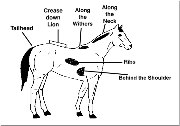
The Henneke Body Scoring Chart is accepted in court as a scientific method of scoring a horse's body condition. It is used successfully in court to prove neglect.
Horse Cruelty Cases
Horse Cruelty at Auctions
Successful Enforcement
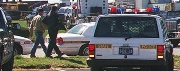
PA State Police arrest horse dealer at PA horse auction
PA State Police Enforce
PA Cruelty Law at New Holland, PA Auction
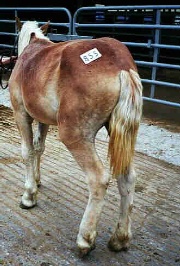
Young draft gelding shipped from NC displays injured left hind leg. A PA equine vet determined that there was no fixing this horse's injured leg. He was humanely euthanised.
No Enforcement
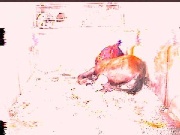
Down and bleeding inside a trailer with Maine license plates at a New Holland, PA auction. Reportedly the horse later died. No charges were ever filed. Blood was pooling on the ground under and outside the trailer.
The Downer Hall of Shame

Down Belgian was down all day at a PA horse auction. Several bystanders attempted to get the horse to rise. A vet was never called...
The Labor Day Mares
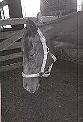 Severely foundered mare's face reveals the pain she is feeling. Mare was found down on a truck at a New Holland auction. Blood oozed from her coronary bands.
A Mule & 2 Standardbreds-
All Had Broken Legs & were Hidden on A Trailer
No Water
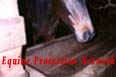
Water tank is empty, even though the faucets work..
The Horse the Killers Refused
& the vet passed.
Unfit Horses Sold at Auction
PSPCA allows sale - NHPD files charges, owner pleads guilty.
Links
California Voters "Just Say Neigh" to Horse Slaughter!
HoofPAC

Shop online at IGive.com with over 600 great stores you know & love- including Back In the Saddle! Up to 26% of the purchase price is donated to the EPN!
Join today!The EPN gets $5 extra the first time you shop!
PayPal accepts credit cards! Please send your tax deductible donation to the:Equine Protection Network, Inc.,
P. O. Box 232, Friedensburg, PA, 17933.

HoofPAC is the political action committee that has been formed to end the slaughter of America's horses. Cathleen Doyle, founder of HoofPAC, led the successful Save The Horses campaign in 1998 that made the slaughter of California's horses a felony.
Contact the EPN
Did You Know?
"Only ignorance! only ignorance! how can you talk about only ignorance? Don't you know that it is the worst thing in the world, next to wickedness? - and which does the most mischief, heaven only knows. If people can say, "Oh! I did not mean any harm", they think it is alright."....
John in Black Beauty by Anna Sewell published in 1877
Page last revised on:


Horse Cruelty
Several states have their cruelty statutes online and can be located by going to your state's website. Locate Statutes and then perform a search for cruelty laws. For an act to be a crime there must first be a written law stating that the act is in fact a crime and is illegal.
State Statutes on EPN Website
The EPN is expanding the state statutes we have on our website. It takes time to search the Internet, copy the statute, add it to our website and upload to the Internet. When asked by people, "What can I do to help?" We respond by suggesting they search (using GoodSearch.com selecting the EPN as their charity),their state's cruelty statutes and then send them to us in e-mail. We have NEVER had anyone follow through. We are all volunteers, we have our own jobs, our own families, our own animals, and yes we like to ride our horses when time allows.
The EPN has sections on Abandoned Animals, Cruelty, Disposal of Dead Animals, Transport, Selling Sick, Lame, or Debilitated Horses, Horsemeat, and Police Animals.
If you would like to search your state statutes to assist the EPN you can send the statutes and the link to the state website where the statute is located to the EPN via e-mail. Please put State Statute in the Subject. Send to EquineProtectionNetwork @ comcast.net . Remove the spaces before and after the "@" symbol which have been added to hinder the dreaded and hated by us all, SPAM! Students will receive a letter thanking them for their community service to the EPN that can be added to their college admittance applications.
When reading the law, determine who has jurisdiction or the authority to enforce the law. Remember that law enforcement depends on citizens to inform them of violations of the law.
Several states, including Pennsylvania, have laws against the selling of sick, lame and debilitated horses. We need to work to have the laws that are already on the books enforced and successfully prosecuted.
The EPN urges citizens to attend horse cruelty hearings in their areas, and if you are unhappy with the sentence imposed by the court, then inform the court of your opinion.
Horse cruelty cases are often lost due to poor investigations and prosecutions, not the law.
PA Cruelty Statutes
Title 18, Section 5511
PENNSYLVANIA STATUTES AND CONSOLIDATED STATUTES PURDON'S PENNSYLVANIA CONSOLIDATED STATUTES TITLE 18. CRIMES AND OFFENSES PART II. DEFINITION OF SPECIFIC OFFENSES ARTICLE F. OFFENSES AGAINST PUBLIC ORDER AND DECENCY CHAPTER 55. RIOT, DISORDERLY CONDUCT AND RELATED OFFENSES
§ 5511. Cruelty to animals
(c) Cruelty to animals.--A person commits a summary offense if he wantonly or cruelly illtreats, overloads, beats, otherwise abuses any animal, or neglects any animal as to which he has a duty of care, whether belonging to himself or otherwise, or abandons any animal, or deprives any animal of necessary sustenance, drink, shelter or veterinary care, or access to clean and sanitary shelter which will protect the animal against inclement weather and preserve the animal's body heat and keep it dry. This subsection shall not apply to activity undertaken in normal agricultural operation.
(d) Selling or using disabled horse.--A person commits a summary offense if he offers for sale or sells any horse, which by reason of debility, disease or lameness, or for other cause, could not be worked or used without violating the laws against cruelty to animals, or leads, rides, drives or transports any such horse for any purpose, except that of conveying the horse to the nearest available appropriate facility for its humane keeping or destruction or for medical or surgical treatment.
(e) Transporting animals in cruel manner.--A person commits a summary offense if he carries, or causes, or allows to be carried in or upon any cart, or other vehicle whatsoever, any animal in a cruel or inhumane manner. The person taking him into custody may take charge of the animal and of any such vehicle and its contents, and deposit the same in some safe place of custody, and any necessary expenses which may be incurred for taking charge of and keeping the same, and sustaining any such animal, shall be a lien thereon, to be paid before the same can lawfully be recovered, or the said expenses or any part thereof remaining unpaid may be recovered by the person incurring the same from the owner of said creature in any action therefor.
PA's Horse Transport Law, Act 64
Signed into law on June 25, 2001 by Governor Tom Ridge
(e.1) Transporting equine animals in cruel manner.-- Notwithstanding any other provision of law, a person commits a summary offense for each equine animal if the person carries, or causes or allows to be carried any equine animal in or upon any conveyance, or other vehicle whatsoever with two or more levels STACKED ON TOP OF ONE ANOTHER. A person who violates this subsection on a second or subsequent occasion commits a misdemeanor of the third degree for each equine animal transported.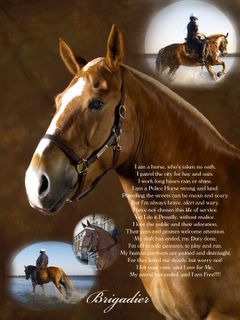 § 5511.2. Police animals.
(a) Illegal to taunt police animals.--It shall be unlawful for any person to willfully or maliciously taunt, torment, tease, beat, kick or strike a police animal. Any person who violates any of the provisions of this subsection commits a felony of the third degree.
(b) Illegal to torture police animals.--It shall be unlawful for any person to willfully or maliciously torture, mutilate, injure, disable, poison or kill a police animal. Any person who violates any of the provisions of this subsection commits a felony of the third degree.
(c) Resitution.--In any case in which a defendant is convicted of a violation of subsection (a) or (b), the defendant shall be ordered to make restitution to the agency or individual owning the animal for any veterinary bills, for replacement costs of the animal if it is disabled or killed and for the salary of the animal's handler for the period of time the handler's services are lost to the agency.
(d) Definitions.--As used in this section, the following words and phrases shall have the meanings given to them in this subsection:
- "Accelerant detection dog."
- A dog which is trained for accelerant detection, commonly referred to as arson canines.
- "Bomb detection dog."
- A dog which is trained to locate a bomb or explosives by scent.
- "Narcotic detection dog."
- A dog which is trained to locate a bomb or explosives by scent.
- "Police animal."
- An animal, including, but not limited to, dogs and horses, used by the Pennsylvania State Police, the Department of Corrections, a county facility or office or by a municipal police department, fire department, search and rescue unit or agency or handler under the supervision of such department, search and rescue unit or agency in the performance of the functions or duties of such department, search and rescue unit or agency, whether the animal is on duty or not on duty. The term shall include, but not be limited to, an accelerant detection dog, bomb detection dog, narcotic detection dog, search and rescue dog and tracking animal.
- "Search and rescue dog."
- A dog which is trained to locate lost or missing persons, victims of natural or manmade disasters and human bodies.
- "Tracking animal."
- An animal which is trained to track or used to pursue a missing person, escaped inmate or fleeing felon.
Organizations Working for Enforcement of Cruelty Laws
Florida
Horse Protection Association of Florida
"A horse is a luxury item. You have no business owning them if you can't pay for them. Are we going to give tax breaks to yacht owners, too?" - Morgan Silver
Texas
Save America's Horses!
|
||||||
